Ch 6: Confidence Interval
STAT 218 - Week 4, Lecture 2
February 5th, 2024
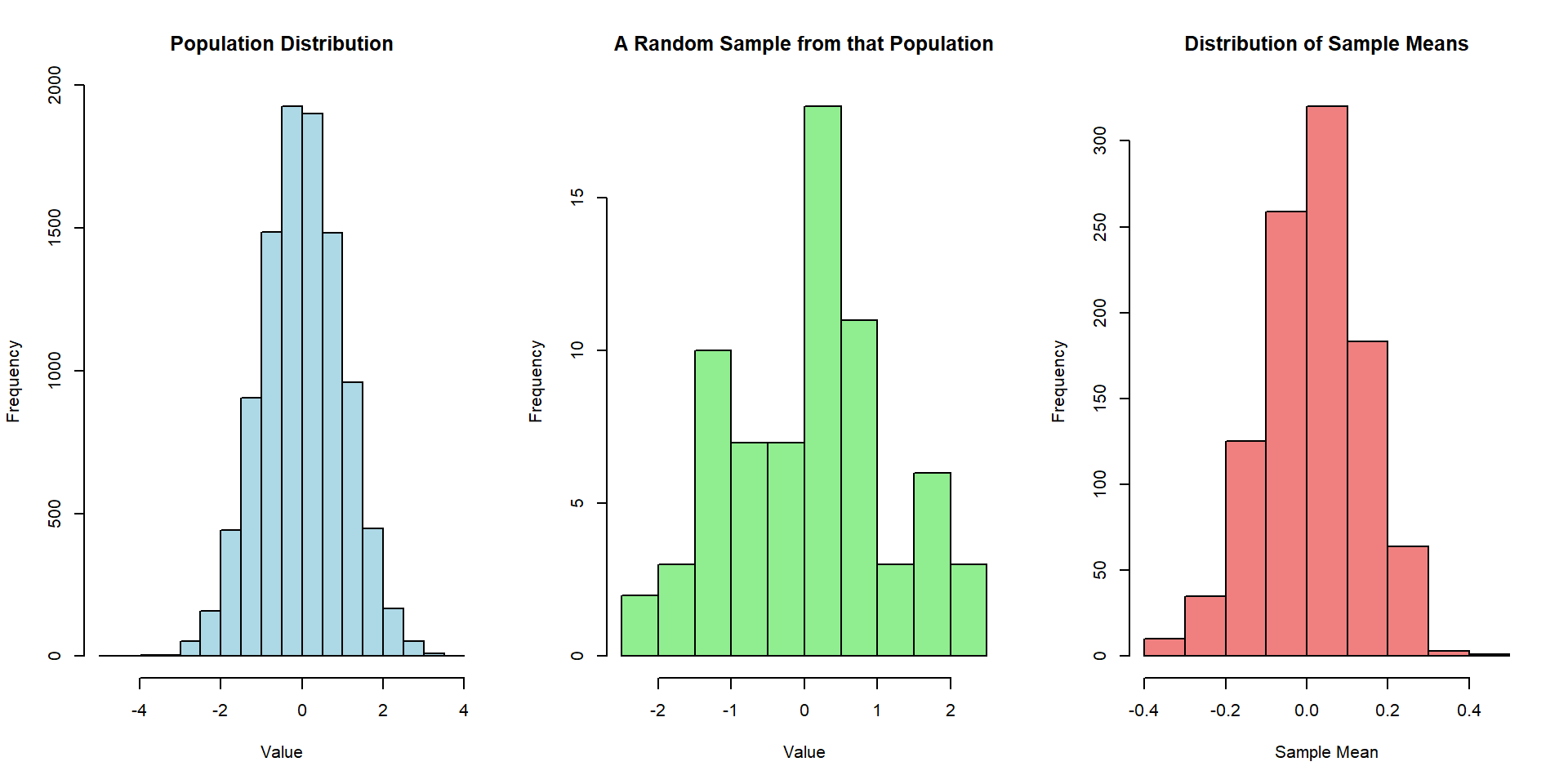
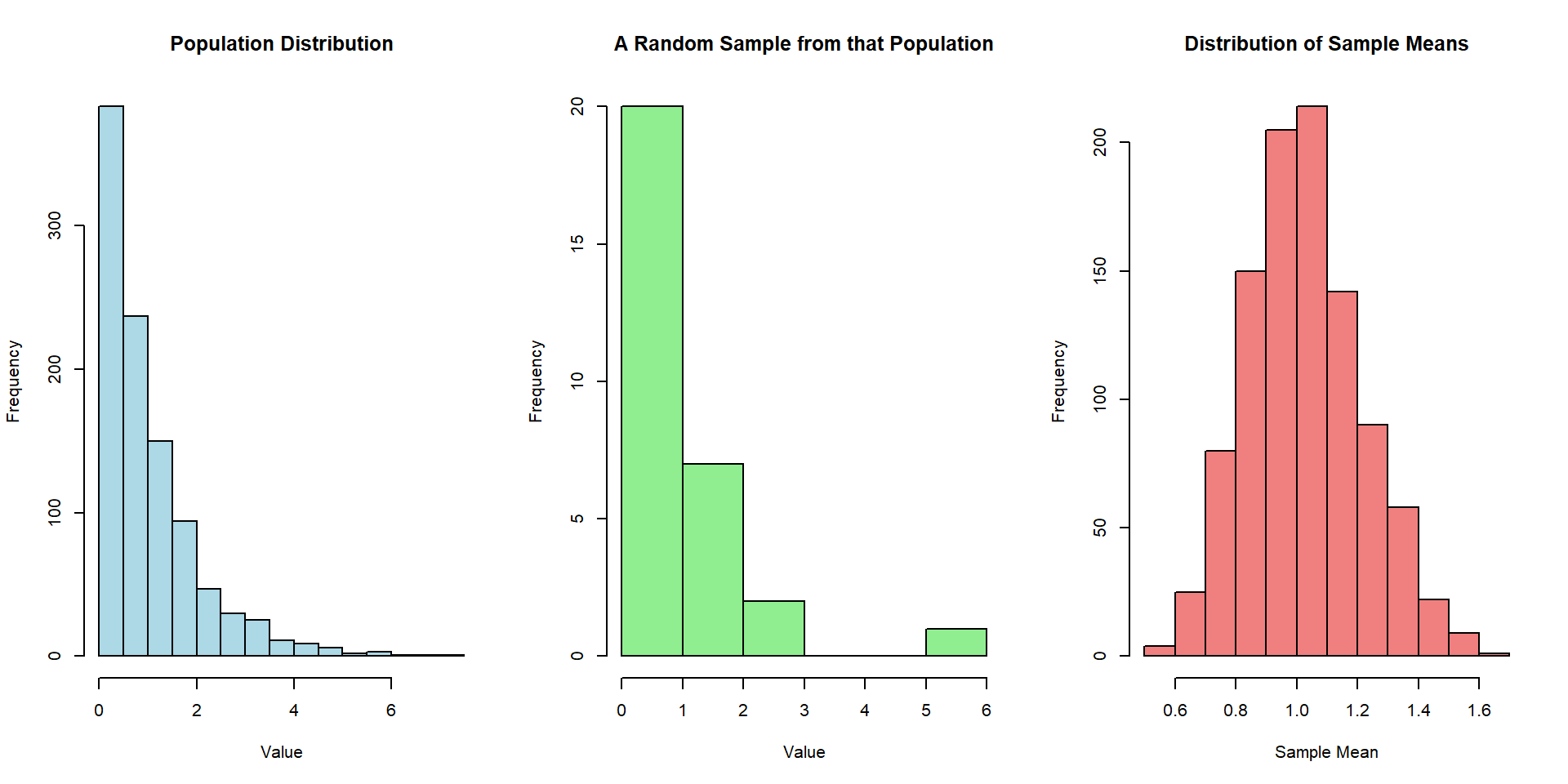
Comparison of Distributions
An Example for Statistical Estimation
Let’s have a look wing areas of 14 male Monarch butterflies at Oceano Dunes State Park in California
- \(\bar{y} = 32.81\) \(cm^2\) and \(s= 2.48\) \(cm^2\)
Suppose we consider these 14 observations as a random sample from a population.
- \(\mu\) = the (population) mean wing area of male Monarch butterflies in the Oceano Dunes region
- \(\sigma\) = the (population) SD of wing area of male Monarch butterflies in the Oceano Dunes region

From the sample data we have, we can say that
- 32.81 is an estimate of \(\mu\).
- 2.48 is an estimate of \(\sigma\).
An Introduction to Confidence Interval - I
- Our aim is to…
- determine an estimate of \(\mu\)
- \(\bar{y}\) was an estimate of \(\mu\)
- determine an estimate of \(\mu\)
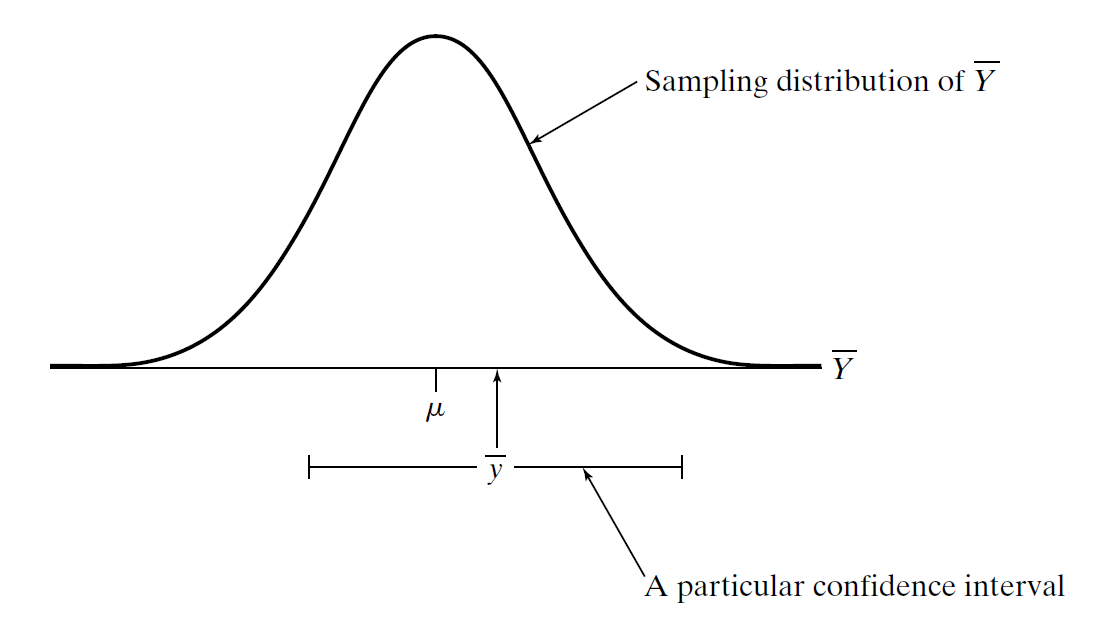
- We also know that the difference between \(\bar{y}\) and \(\mu\) is rarely more than a few standard errors.
Tip
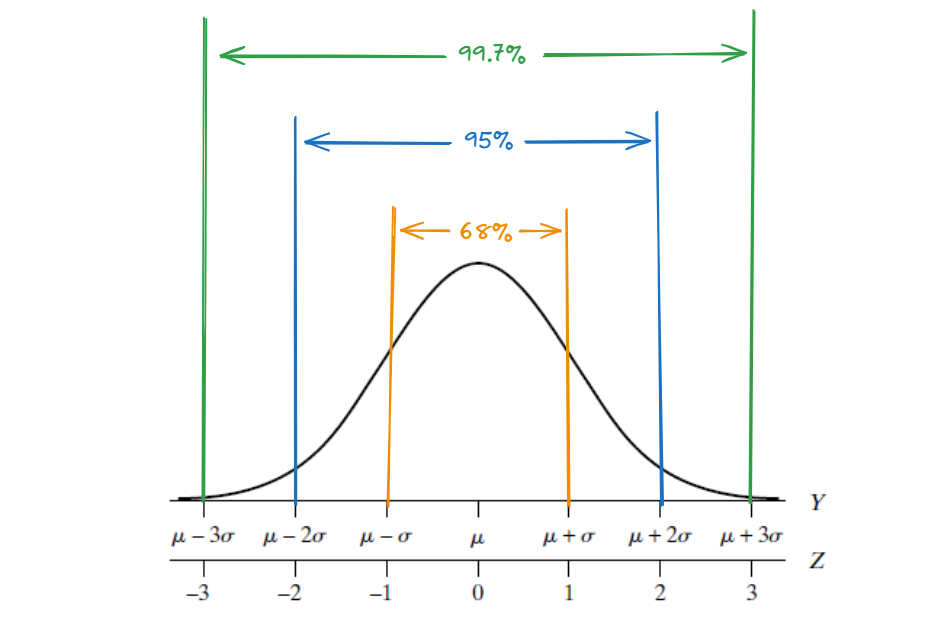
If \(Z\) is a standard normal random variable, then the probability that \(Z\) is between \(\pm\) 2 is about 0.95 (OR 95% if we remember The 68/95/99.7 rule)
Understanding Confidence Intervals
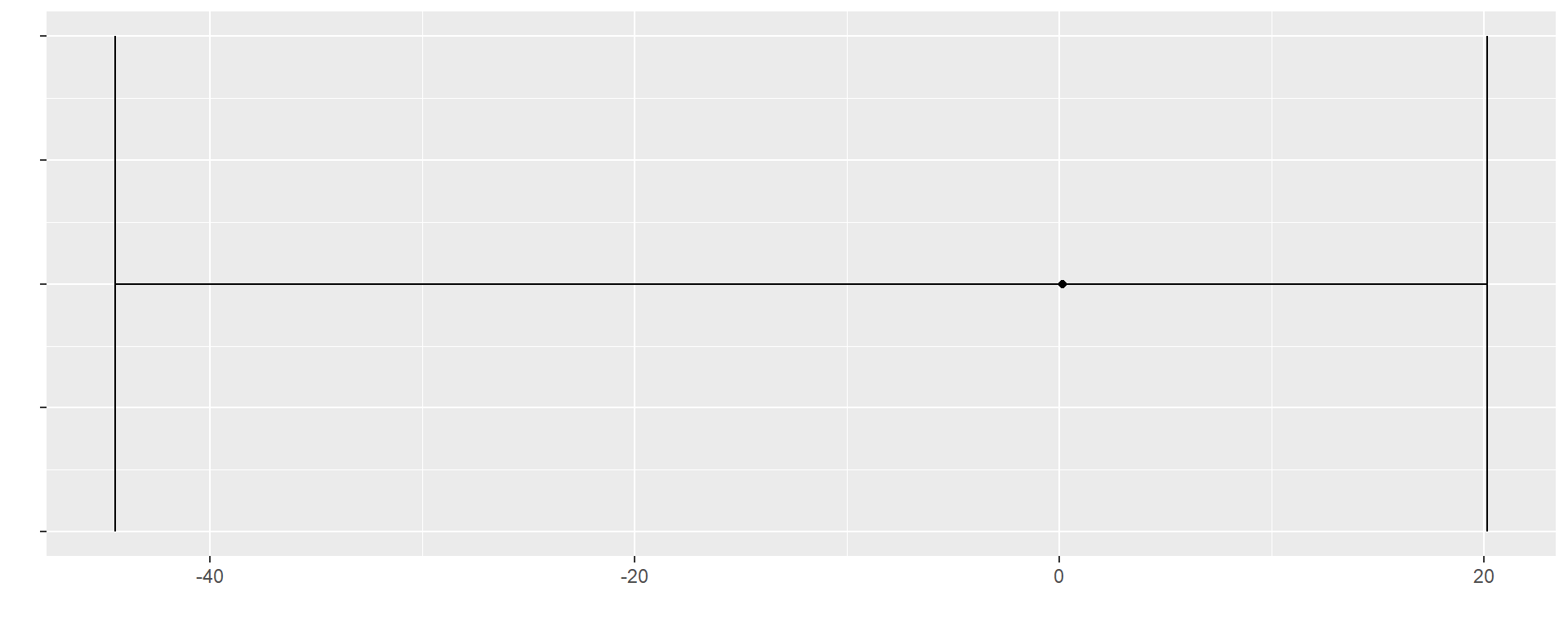
To help you visualize, imagine we have a population, and from that population, we randomly select a group of 20 observational units
95%CI = (-44.47, 20.13)
Understanding Confidence Intervals
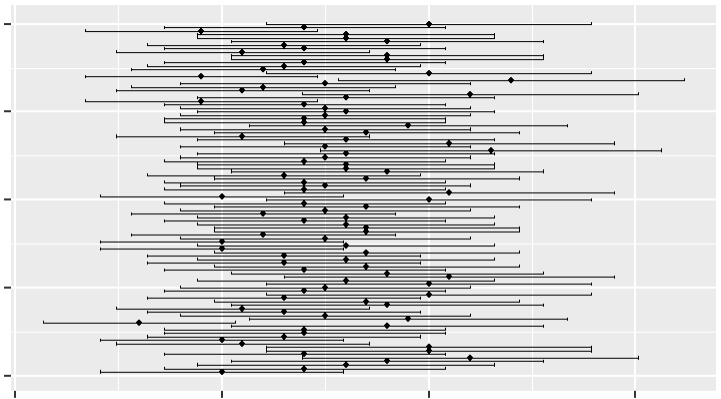
If we repeat this process 100 times, creating 100 different samples of 20 observational units each, we would end up with 100 different samples drawn from the population.
Understanding Confidence Intervals
If we calculate confidence intervals for each of these 100 samples, we will find that…
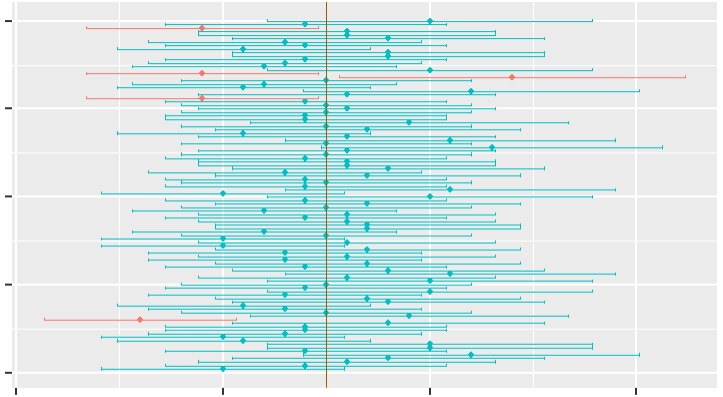
- Around 95% of these intervals capture the true population mean
- We are 95% confident that the true population mean is in this confidence interval.
Confidence Interval and Sampling Distribution